
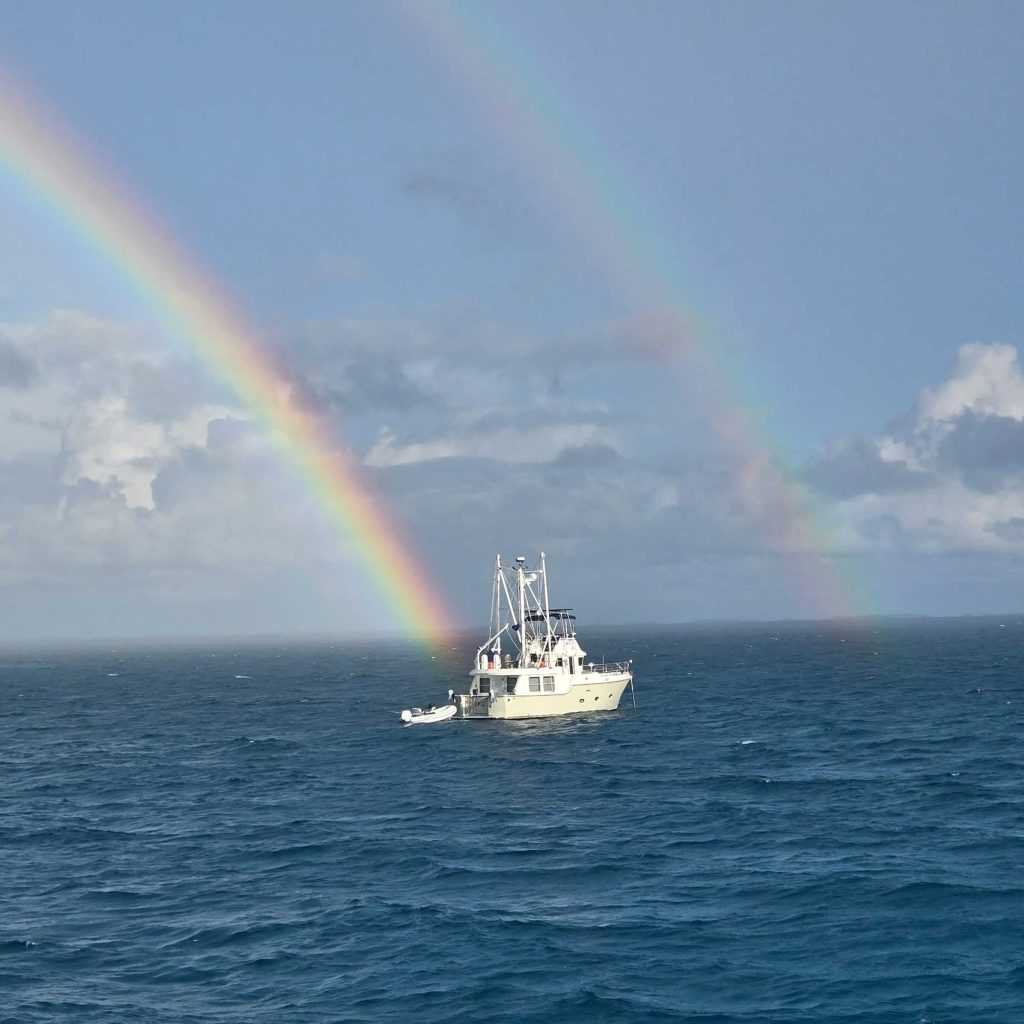
Marco and Karen Johnson had caught the cruising bug and that turned into a full-blown cruising dream. They bought a Nordhavn 40, which they named Epic, learned to manage it by themselves without crew and then took the big leap.
First, they joined the annual Nordhavn Taco Run in Mexico and then staged in a La Paz marina for the big one, the 2,800-mile crossing from Mexico to the Marquesas Islands in French Polynesia. It would be a challenging passage and one of the longest along the Pacific’s famous “coconut milk run.”
They foaded Epic with 1,216 gallons of fuel split between the 40’s main tanks and two custom-build tanks that were strapped on the flybridge and the after deck. Their plan was to make the passage without stopping and thus would need a fairly large margin of error. On paper, they predicted they could travel almost 4,000 miles at 1,100 rpms.
Last March, they untied the mooring lines and set off on Epic’s first ocean crossing. It was Marco and Karen’s first passage as well. The weather at the start was bad with head winds and bouncy seas. They were tempted to push the throttle forward to get through it, but they knew that gravest danger of the trip was not wind and waves but running out of fuel hundreds of miles from land.
The “go slow, go far” plan worked but there had issues to cope with along the way. Before they got to the equator and earned their “shellback status,” the starboard stabilizer malfunctioned leaving them with only the port one to keep Epic from rolling too much. They had to trim it manually, but they managed.
Once they got into the South Pacific trade winds, life got considerably better as they rolled easily down the trade wind swells and made excellent time. They we still doing fuel-burn calculations every day and watching the miles tick off at five or so and hour. It was slow but efficient. They calculated they were burning just under a gallon per hour.
On April 5, 2026, they raised the green mountains of Nuku Huiva and soon rounded the headland to enter Taiohea Bay. For the first time in 24 days, they felt Epic run smoothly on flat water. Marco and Keren had managed two-person watches for the whole trip and were now seasoned pasagemakers.
They had averaged 4.93 knots for the trip and arrived with 370 gallons of diesel in reserve. Marco figured that would allow them to steam another 1,250 miles, if necessary.
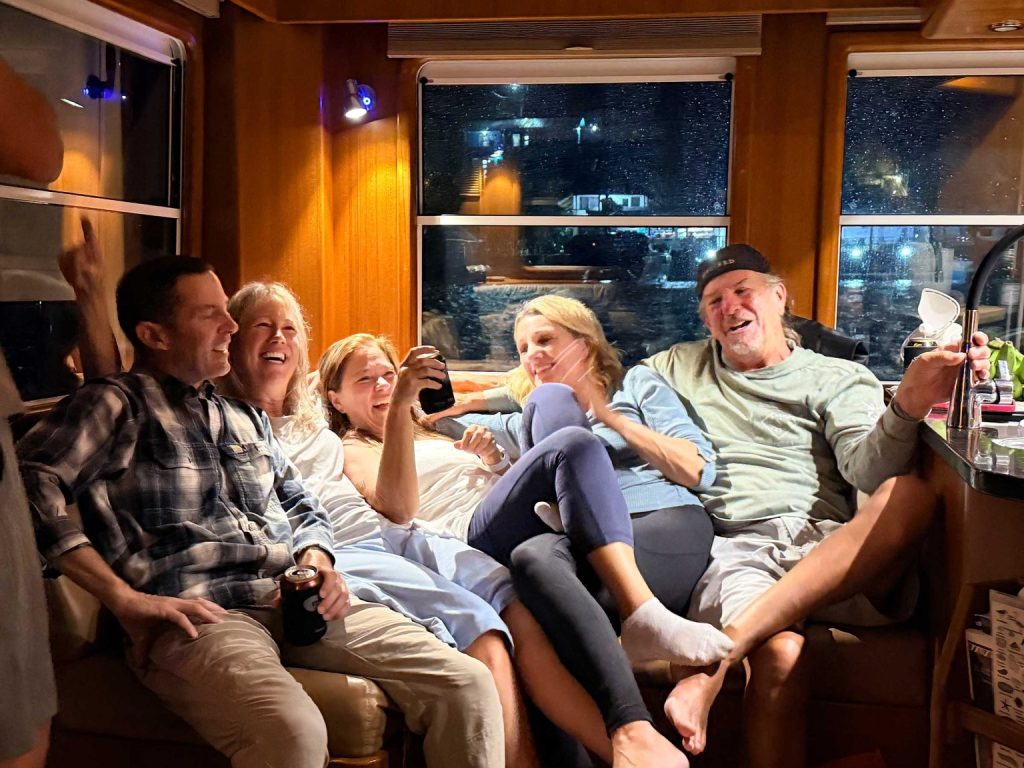 (The Nordhavn mini-rendezvous in the South Pacific.)
In Nuku Hiva, Epic’s crew met up with two Nordhavns that had also made the ocean crossing from Mexico to French Polynesia and this became a min-fleet that cruised and partied together as Norhan owners habitually do.
The Pacific cruise did not end in the Marquesas. In fact, that landfall was only the beginning as they spent the next six months cruising westward from island group to island group. They visited the Tuamotus, Tahiti and the Isles sou les Vents.
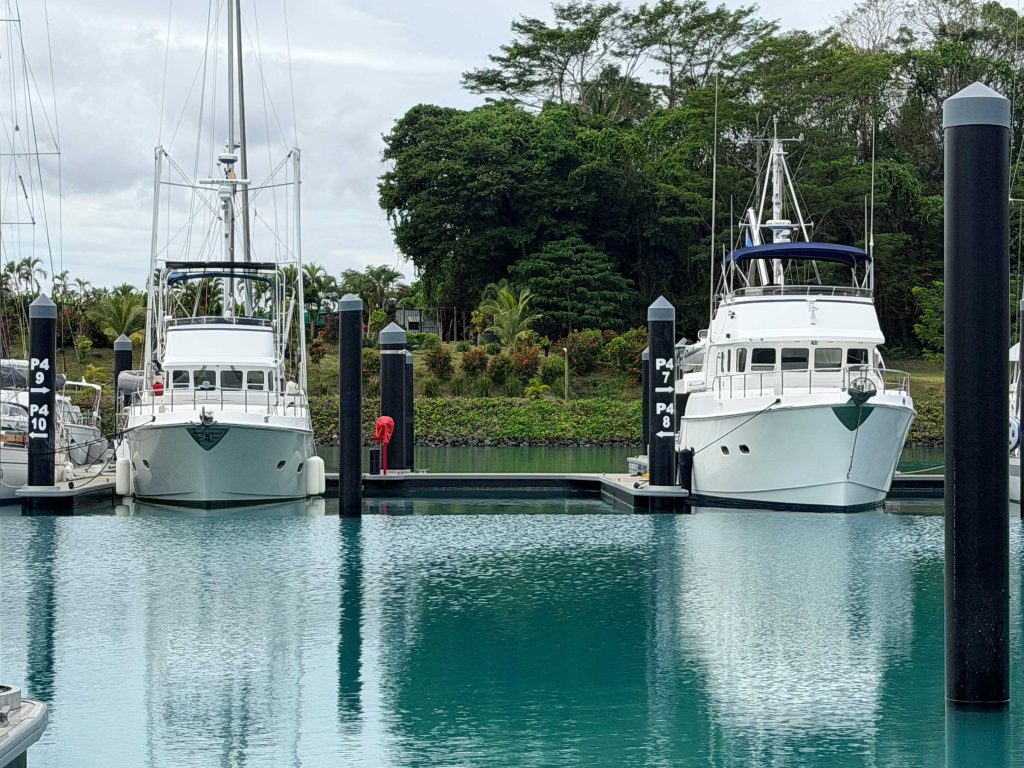 (Epic, left, in a marine in Tonga half way across the South Pacific.)
They crossed to the Cook Islands and then steamed to Tonga after that. They had a clean weather window for the 75-hour passage to Fuji during which Karen developed a kidney stone. Luckily, in Suva, Fiji they found a urologist and a private hospital where she could be treated.
Epic in Fiji is where the Johnson’s story ends for now. They still have another long passage ahead of them before hurricane season but that is for another day.
An inexperienced couple with big dreams and a blue-water capable 40-foot boat did what few would consider possible, and they did it on their own without serious incident. It speaks volumes about their planning and perseverance and about the seakeeping qualities of their Nordhavn 40. It was nothing short of epic.