Browsing: NOAA

Cruising Life
By

NOAA: Larger Dead Zone in the Gulf

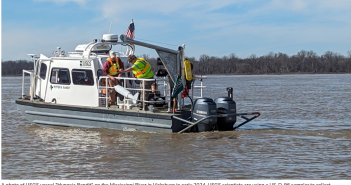
Here’s some sobering news from NOAA: NOAA is forecasting an above-average summer “dead zone” in the Gulf of Mexico covering approximately 5,827 square miles — an area roughly the size of Connecticut. The dead zone, or hypoxic area, is an area of low oxygen that can kill fish and other marine life. It occurs every summer and is primarily a result of excess nutrient pollution from human activities in cities and farm areas throughout the Mississippi-Atchafalaya watershed. The average dead zone measurement is 5,205 square miles over the 37-year period of record. The U.S. Geological Survey (USGS) provides Mississippi and…
Cruising Life
By

More Hurricanes Coming: NOAA

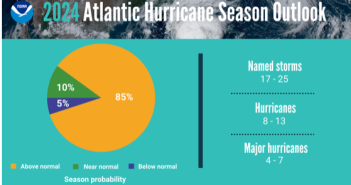
Here’s some sobering news from NOAA about this year’s hurricane season: NOAA National Weather Service forecasters at the Climate Prediction Center predict above-normal hurricane activity in the Atlantic basin this year. NOAA’s outlook for the 2024 Atlantic hurricane season, which spans from June 1 to November 30, predicts an 85% chance of an above-normal season, a 10% chance of a near-normal season and a 5% chance of a below-normal season. NOAA is forecasting a range of 17 to 25 total named storms (winds of 39 mph or higher). Of those, 8 to 13 are forecast to become hurricanes (winds of…

Cruising Life
By

Sea Levels Rising Faster: NOAA

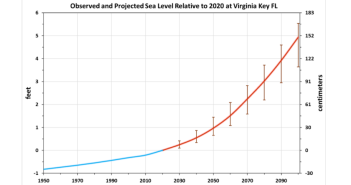
Sea levels are rising faster than expected in South Florida, according to the National Oceanic and Atmospheric Administration. Actually, they’re rising all around the world, but South Florida is of particular interest. If the pace of the rise stays as now projected, the sea level in Miami could increase by two feet by 2070. That’s a major concern because the average elevation in Miami is just three feet. In the past 80 years, the sea level has risen about a foot, but the pace of the rise has picked up in recent years. Indeed, eight inches of that foot have…

Cruising Life
By

Great Lakes: Where Did All the Ice Go?

NOAA says there’s been a record low level of ice on the Great Lakes so far this winter. Here’s their report: NOAA researchers at NOAA’s Great Lakes Environmental Research Laboratory (GLERL) report that they’ve seen a steady decrease in ice coverage across the Great Lakes, which has reached a historic low. Together, Great Lakes ice coverage was measured at 2.7 % on February 11, 2024. Coverage on each of the lakes was measured as follows: Lake Superior 1.7 % Lake Michigan 2.6 % Lake Huron 5.9 % Lake Erie 0.05 % Lake Ontario 1.7 % Lakes Erie and Ontario are…

Cruising Life
By

NOAA Saved 350 Lives in U.S. Last Year

Here’s some good news from NOAA, the National Oceanic and Atmospheric Administration: NOAA’s satellites, known for their pivotal role in tracking weather and climate, were behind the rescue of 350 people from harrowing, life-threatening ordeals in the U.S. and its surrounding waters in 2023. NOAA’s polar-orbiting and geostationary satellites are part of the global Search and Rescue Satellite Aided Tracking system, or COSPAS-SARSAT, which uses a network of U.S. and international spacecraft to detect and locate distress signals sent from 406MHz emergency beacons onboard aircraft, boats and handheld Personal Locator Beacons (PLBs) anywhere in the world. Since its start in…

Cruising Life
By

Say Hello to El Nino: NOAA

Here’s the latest from NOAA about El Nino and what it means for the U.S. The expected El Nino has emerged, according to scientists at NOAA’s Climate Prediction Center, a division of the National Weather Service. In the monthly outlook released today, forecasters issued an El Nino Advisory, noting that El Nino conditions are present and are expected to gradually strengthen into the winter. El Nino is a natural climate phenomenon marked by warmer-than-average sea surface temperatures in the central and eastern Pacific Ocean near the equator, which occurs on average every 2-7 years. El Nino’s impacts on the climateextend…

Cruising Life
By

Near-Normal Hurricane Season: NOAA

Here’s the latest from NOAA for this year’s Atlantic hurricane season: NOAA forecasters with the Climate Prediction Center, a division of the National Weather Service, predict near-normal hurricane activity in the Atlantic this year. NOAA’s outlook for the 2023 Atlantic hurricane season, which goes from June 1 to November 30, predicts a 40% chance of a near-normal season, a 30% chance of an above-normal season and a 30% chance of a below-normal season. NOAA is forecasting a range of 12 to 17 total named storms (winds of 39 mph or higher). Of those, 5 to 9 could become hurricanes (winds…

Cruising Life
By

NOAA Update: Above-Average Hurricane Season

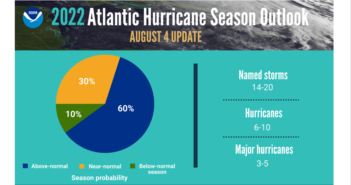
We’ve been lucky so far, but that may change before too long, according to the new mid-season hurricane estimate from NOAA. So far, the Atlantic hurricane season, which runs from June 1 through Nov. 30, has seen just three named storms and no hurricanes. But now we’re heading into the peak hurricane months, and NOAA (the National Oceanic and Atmospheric Administration) is calling for an above-average season for the months ahead. This recent update is similar to NOAA’s original forecast, in May, but now forecasters say the likelihood of an above-normal season is 60 percent; the original forecast was 65…

Cruising Life
By

NOAA Proposes Speed Limits Near Whales

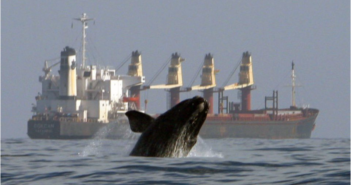
NOAA is proposing new speed limits to protect North Atlantic right whales. Here’s NOAA’s announcement last week: Today, NOAA Fisheries announced proposed changes to vessel speed regulations to further protect North Atlantic right whales from death and serious injuries resulting from collisions — part of a multifaceted approach to stabilize and recover this endangered population. The changes would expand the current mandatory seasonal speed restrictions of 10 knots or less in designated areas of the ocean and extend to most vessels measuring 35 to 65 feet in length. In addition, the agency is releasing a draft “roadmap” for public comment about…

Cruising Life
By

NOAA: June Was 6th Warmest Month Ever

Here’s the latest monthly report from NOAA, with some disturbing news: June’s average global temperature continued 2022’s remarkably warm trend, as both the month and the year so far ranked sixth warmest on record. In addition, global sea ice reached near-record lows last month, with Antarctica seeing its lowest June ice coverage on record, according to scientists from NOAA’s National Centers for Environmental Information (NCEI). (An iceberg on the Antarctic Peninsula is pictured above.) Here’s a closer look into NOAA’s latest monthly global climate report: Climate by the numbers June 2022 The average global surface (land and ocean) temperature in…

1 2 3