
Several years ago, I got a phone call from our yacht club’s manager in the middle of the day. He was looking for my son’s phone number because, he said, “His boat is on fire on its mooring off the club.”
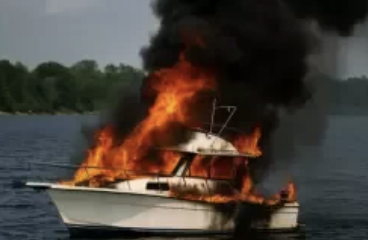
On fire? I called my son and then raced down to the water front and low and behold his 21-footer was engulfed in flames, If you have never seen a fiberglass boat with full fuel tanks burn, it is a terrifying sight.
The fired burned through the mooring lines and the flaming hulk began drifting with the wind toward three classic, wood 12-meter yachts that were moored nearby. There was nothing we could do since, at that point, Newport, Rhode Island did not have a fire-rescue boat.
Luckily, the boat sank before it could do any damage. All that was left, when the salvage crew lifted the hull from the harbor’s bottom, was a charred, molten mass of incinerated plastic and the remnants of the outboard.
In the analysis that followed, conducted by a professional marine surveyor for the insurance company, it was discovered that the battery charging solar panel that had recently been installed did not have the required diode in the wiring and thus the panel over-charged the battery which in turn caught fire.
Having a fire onboard is one of the worst mishaps on any boat, particularly if you are underway and far from shore. And, the lesson we learned, is that it can happen to any boat owner no matter how many years of experience you have. Yet, in the realm of safety at sea education, fire prevention is often well down the list of situations to prepare for.
With that in mind, here’s a link to a thorough article by experts on the topic that will clarify just what to do and not to do when fire-proofing your cruising boat.